
Swapping the 1's and 0's
— where it actually saves time and data
Every byte of code is a row of switches: on (1) or off (0). Change WHICH bits are on and you change what the machine stores and does. Done right, that's the cheapest optimization in computing. Done as magic, it's nothing. This page shows the real version — with the honest limits printed right under each claim.
The idea in one picture
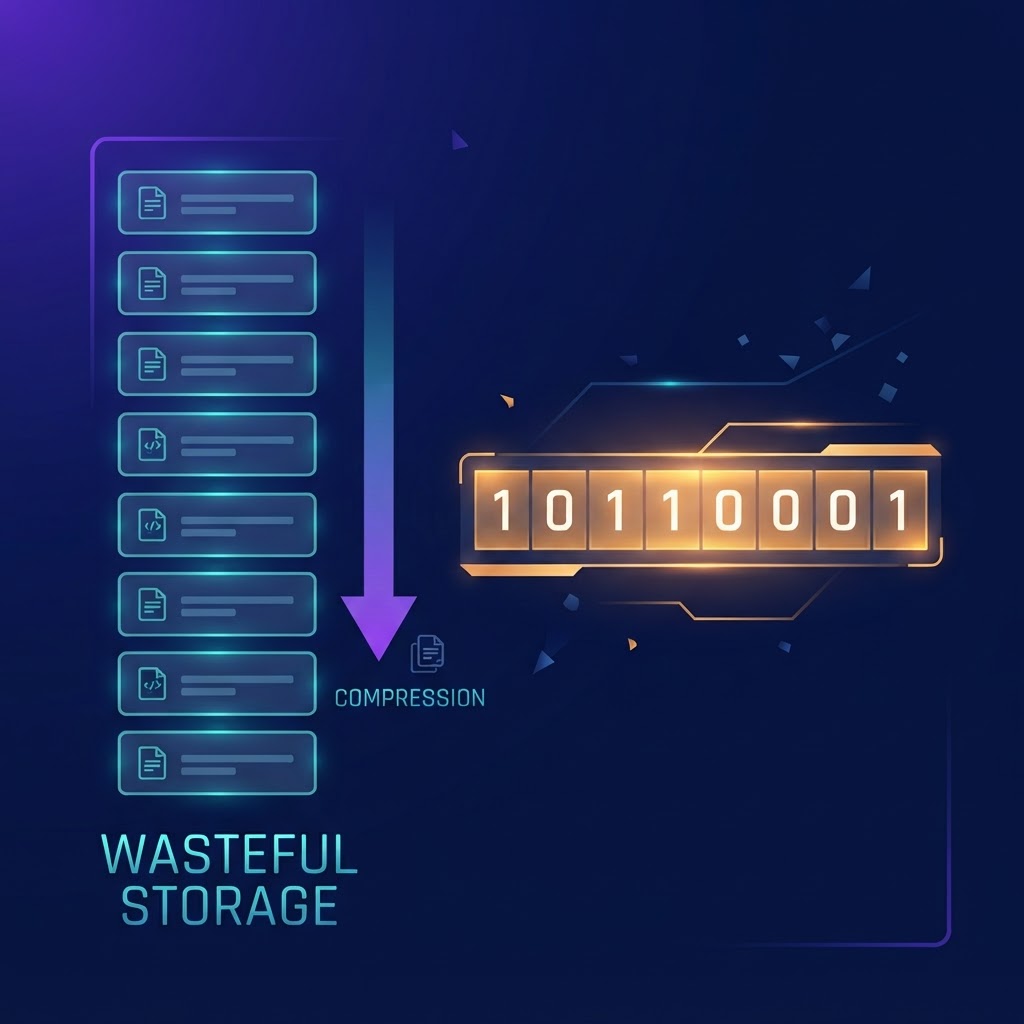
Storing 8 yes/no facts the wide way
≈ 8–64 bytes, depending on the field type
The same 8 facts as bits
Exactly 1 byte. Same information.
Four ways flipping bits pays
Each card: the claim, the number, and the no-fibs limit.
Fewer 1's, fewer bytes
A bitset packs 8 on/off facts into 1 byte instead of 8 words.
~97% smaller
Honest limit: Only for yes/no data. Text and images need their real bits; you can't shrink them by wishing.
Cheaper instructions
XOR (one flip) is a single CPU cycle; a whole field rewrite is many.
1 flip = 1 cycle
Honest limit: Real, but only when the logic is actually bit-shaped — a bitmask, a flag, a parity check.
Deltas instead of copies
Store only the bits that flipped between two versions.
Saves ~the difference
Honest limit: Great for near-identical data; a fresh version with big changes still costs a big patch.
The honest exchange rate
Every byte you never store, never ships, never gets read back.
1 bit saved × every load
Honest limit: Savings multiply with traffic — but they come from better encoding, not from swapping digits.
Savings, version two: ship only the flips
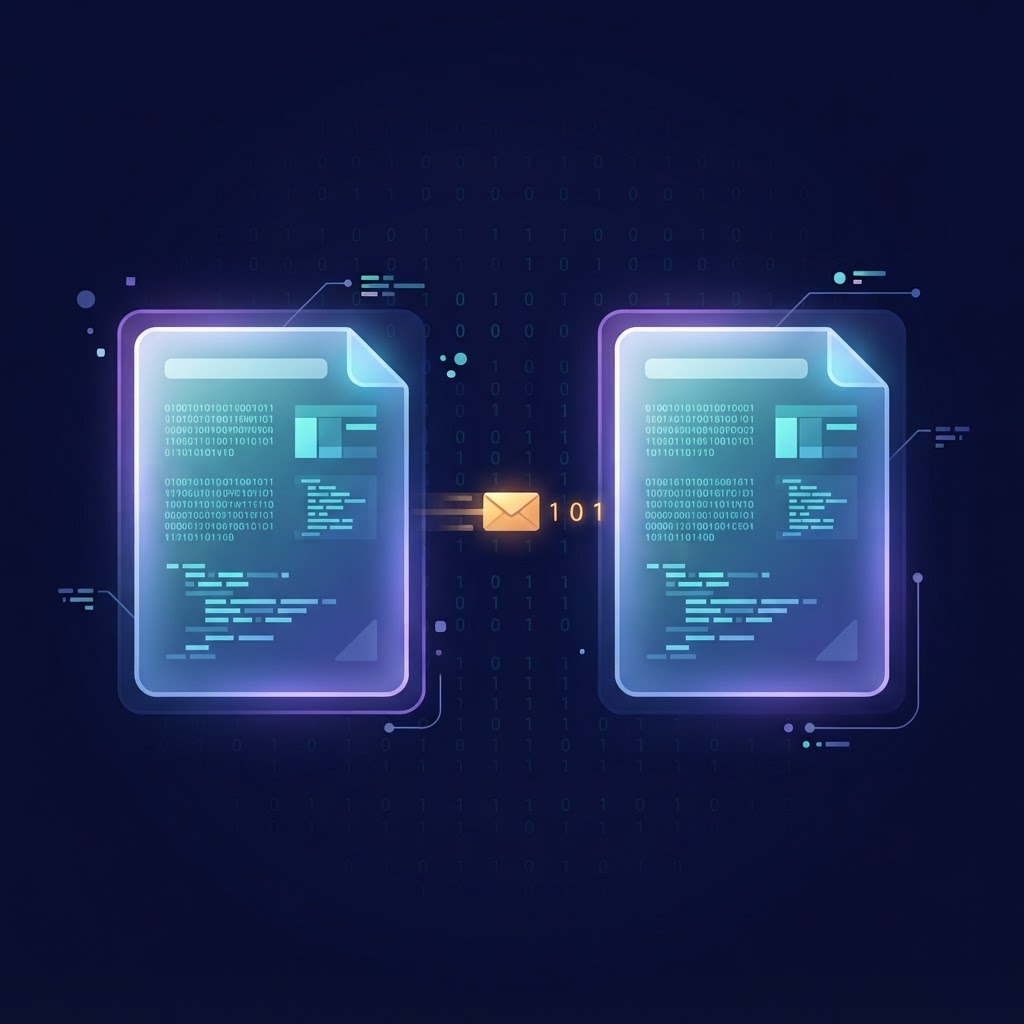
When two versions of something are almost the same, don't store the second copy — store the difference: the few bits that flipped, as an XOR patch. One tiny operation reconstructs the new version from the old.
That's why software updates are sometimes megabytes instead of gigabytes, and why version-control systems work at all. The smaller the difference, the bigger the saving — the math is on your side exactly when things barely changed.
Honest limit: a version that changed a lot still needs a big patch. XOR deltas save the DIFFERENCE, never the whole thing.
The no-fibs fine print
- · Swapping digits is not the trick — changing the encoding is. Flipping a 1 to a 0 in a finished program doesn't make it faster; it makes it a different program. Real savings come from choosing representations where fewer bits carry the same meaning.
- · The percentages above are order-of-magnitude illustrations, not benchmarks of this app. "97% smaller" compares 8 one-byte fields to one packed byte — your compiler and data layout decide the real number.
- · XOR-flip deltas and bitmasks are classic, proven techniques (version control, Unix file permissions, parity memory) — but this page explains them, it doesn't sell a product that performs them.
- · Quantum computers don't use plain bits at all — binary is the classical baseline, and every claim here lives inside that classical world.
See it run, live
The Ones Lab is the page where the bits are real: type text and watch it become 1's and 0's, break a number into its bits, and flip single bits to watch values move — with the Hamming weight (the count of 1's) computed live. No account, nothing saved.
Open the Ones LabWant the worked applications? The Bit-Flip Lab shows the same principle paying out in permissions, parity, and patches.